
Legendre Group
Open BIM turned complexity into the reason it works.
How Legendre ran a €132M energy-recovery plant refurbishment on open standards, and got the subcontractors asking for the platform themselves.
The project in one panel.
The facts a peer in your shoes scans first: who they are, what they build, and which parts of Catenda they put to work.
- Company
- Legendre Group
- Sector
- General contractor
- Region
- Rennes, France (projects London → Paris → Lisbon)
- Size
- 2,400+ people, 80-year history
- Project
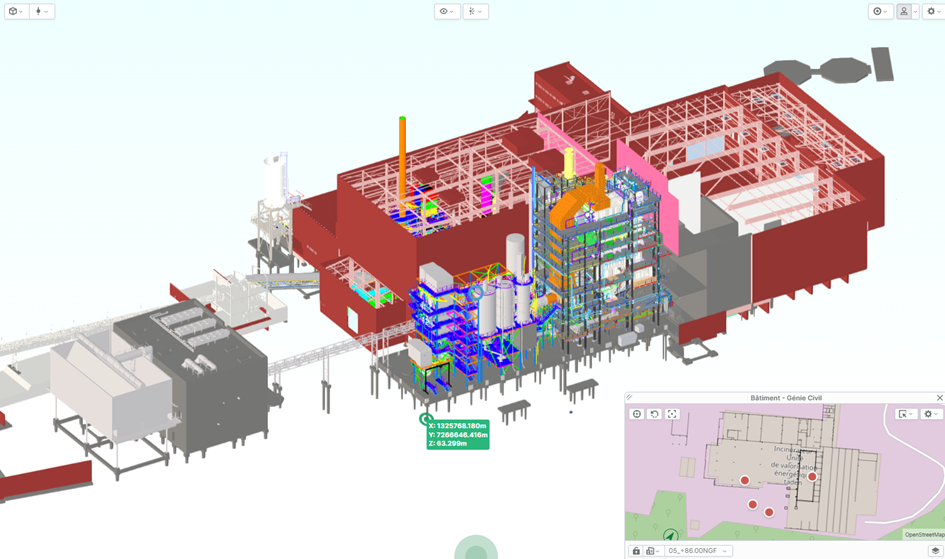
- Taden Energy Recovery Plant (UVE), €132M refurbishment, 99 GWh/year
- Products used
Before Catenda, complexity was the catalyst.
The Taden UVE project is far from a simple build: a €132 million refurbishment of an existing facility, raising capacity to convert domestic waste into 99 GWh of electricity per year. It spans multiple phases and zones, with simultaneous design and construction and a diverse range of collaborators, Legendre managing civil works while SUEZ handled the industrial side, across software like Bricscad, Solidworks, Revit and Bocad, and teams from different countries speaking different languages.
For Damien Lefranc, Team Leader of Digital Construction Services, that complexity is the point: it is the project and the collaboration between stakeholders that drive the need for open BIM. In this environment, interoperability is not a luxury, it is a necessity, and closed systems fail.
“Closed BIM is a very bad solution for this kind of project. We would spend too much time and money converting models and making them accessible for all team members.”
What they did with Catenda.
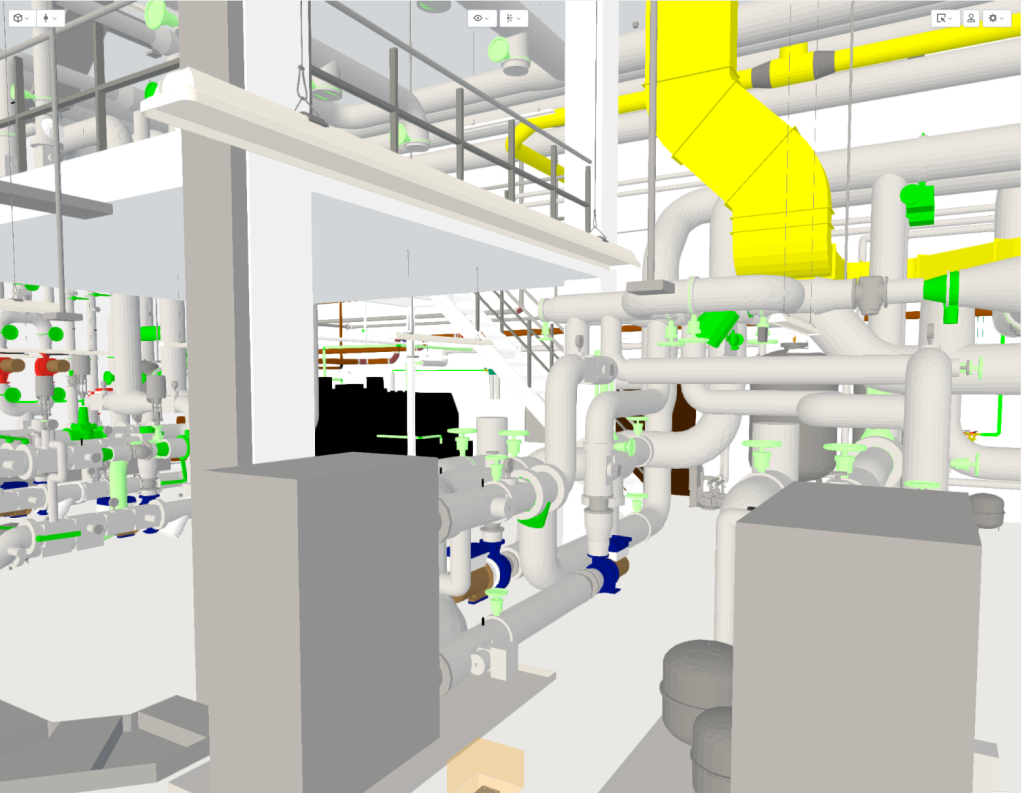
Legendre has used open standards like IFC and BCF since 2015, building a digital ecosystem that reaches beyond internal teams to long-standing subcontractors and partners, from design to site. Catenda Hub, a CDE built on open standards, serves as the central platform, chosen for an ease of use that makes models and tools accessible even to non-specialists on a project with over 100 users.
The team also built user-friendly dashboards powered by Catenda's API (with startup SeveUp), giving a global overview of models, documents and issues via a single URL.
What changed once the project had one source of truth.
The clearest sign of success isn't a cost figure, it's that open BIM has stopped being a debate, with subcontractors who once hesitated now reaching for the platform first. The gains the team values most are qualitative: better quality of work and less tension on site.
On a project where every build is effectively a prototype, that shows up in concrete moments, like the crew finding piling work easier because point coordinates could be pulled straight from the model.
It's not a subject anymore. We can even say that on projects, it's the subcontractors who call us asking, 'Have you put Catenda in place or not? Where can we find the information?'
Damien LefrancTeam Leader, Digital Construction Services, Legendre · General contractor, France
100+
users on one open CDE, specialists and non-specialists
€132M
energy-recovery plant refurbishment, 99 GWh/year
2015
running on open IFC/BCF standards since
1 URL
global overview of models, documents and issues
More stories from the same shoes.


Your project could be the next story on this page.
See it on your own model.
Bring your IFC. That's it.